
Thermal camera
The example uses a 384 × 288 thermal camera. Confirm that its video output format, connector and power requirements match the rest of the aircraft system.
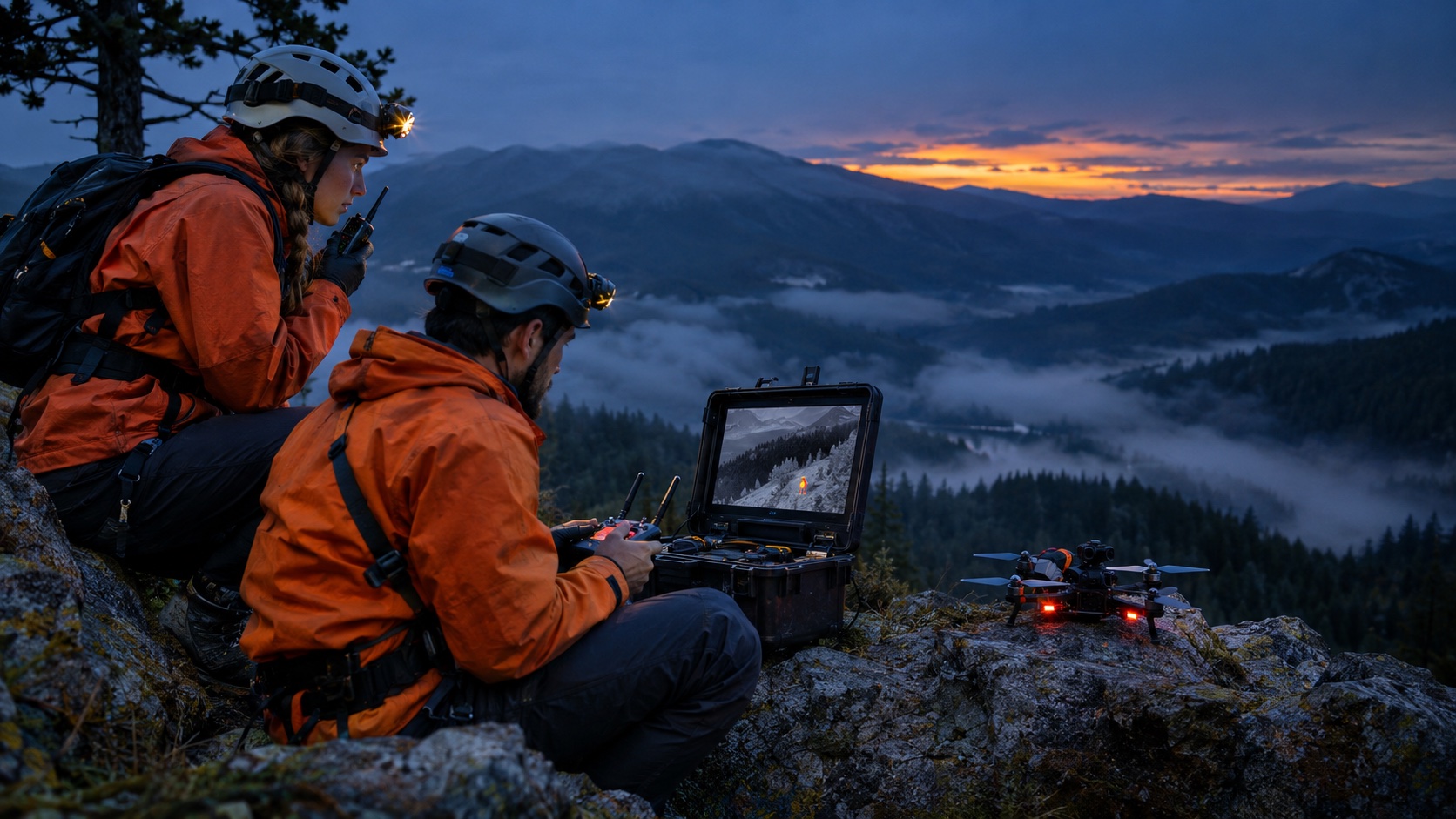
See how a thermal camera, analog FPV transmitter and ground receiver can support a night search workflow, with attention to video format, frequency and power.
A missing-hiker search with limited visibility across mountainous terrain.
A 384 × 288 thermal camera, 3.3G 10W transmitter and ground receiving station.
Plan the grid, scan terrain, confirm a location and support the ground team.
Each component affects the complete analog FPV video link. Check the interfaces and operating requirements at every step before choosing equipment for night search & rescue.
The example uses a 384 × 288 thermal camera. Confirm that its video output format, connector and power requirements match the rest of the aircraft system.
The AL3310 3.3G 10W sends the camera feed from the aircraft. Its published input range is 24–36 V; plan supply capacity, antenna placement and cooling.
Choose a receiver with a channel that exactly matches the selected transmitter frequency in the 3060–3495 MHz range. Check the antennas and local spectrum rules.
Make the received picture available to the search team on a suitable monitor. Test the image, channel and recording workflow before starting the planned search pattern.
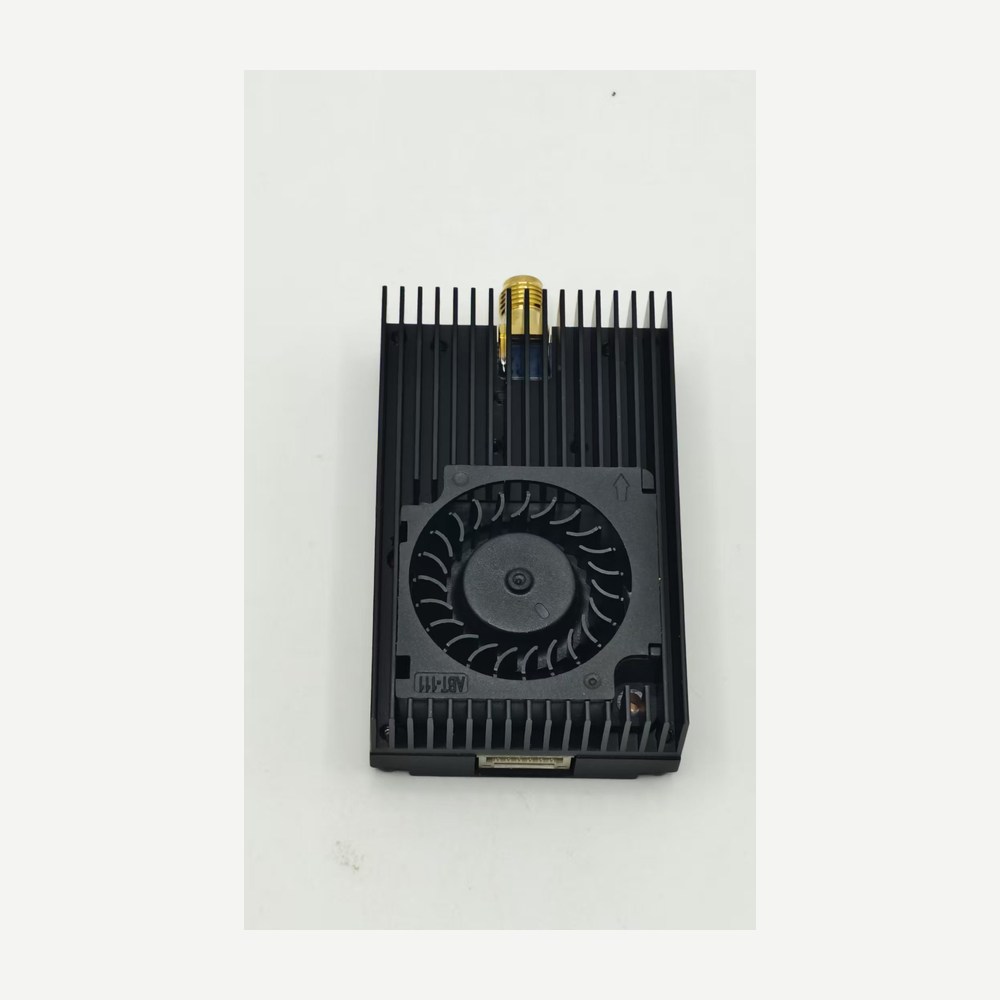
3060–3495 MHz · 10 W · 24–36 V. Explore the product details and compare them with the complete system.
View product→Practical answers about equipment selection, compatibility and the limits of this example setup.
Not automatically. Confirm the camera provides a video signal the transmitter accepts, and check connectors, pinout and camera power requirements.
The published transmitter range is 3060–3495 MHz. The receiving equipment must share the exact selected channel and use an antenna suited to that frequency.
The AL3310 is listed for 24–36 V input. Confirm polarity, current capacity and the final aircraft wiring against the model documentation.
No. It carries the camera view to the team; search coverage, location confirmation and response decisions still depend on the operating team and conditions.
Discuss a catalogue model or contract manufacturing brief. Share your setup, quantity and timing.